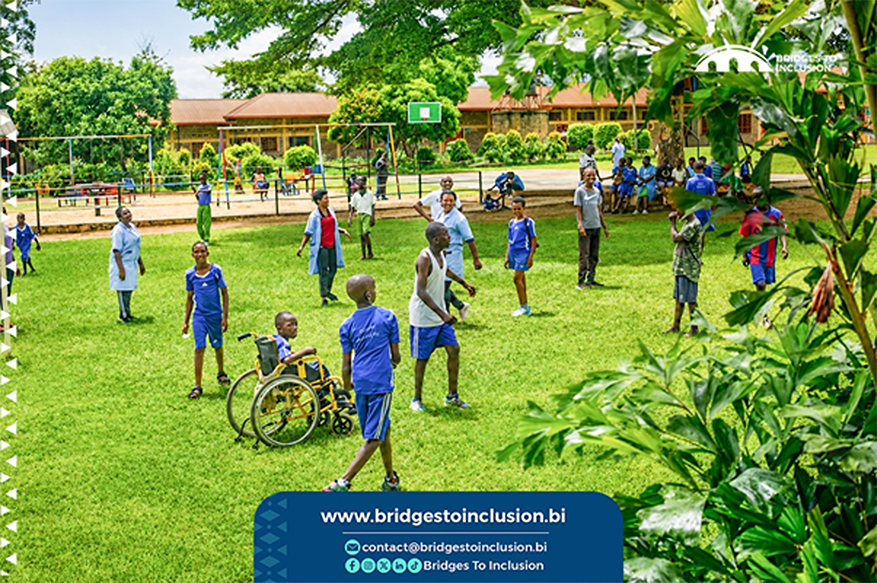
 Children with physical disabilities continue to face barriers that go far beyond mobility.
Many of these challenges are rooted in misconceptions that influence how they are perceived, included and supported.
When society focuses on limitations instead of abilities, children are often denied opportunities to learn, play, and participate fully in their communities.
It is time to challenge these misconceptions and replace them with understanding.
Myth 1: “Children with physical disabilities cannot go to school.”
A physical disability does not affect a child’s ability to learn.
What often prevents children from attending school is not their disability, but inaccessible classrooms, difficult transportation, lack of appropriate mobility equipment, and limited inclusive learning environments.
With accessible schools, supportive teachers, and the right mobility solutions, children with physical disabilities can thrive academically alongside their peers.
Education should never depend on a child’s ability to walk.
Myth 2: “They will always depend on others.”
Every child has unique strengths, talents, and potential.
With early intervention, rehabilitation, appropriate mobility equipment, and family support, many children develop greater independence over time.
They learn new skills, make decisions, build relationships, and participate more actively in daily life.
Independence is not achieved overnight , it grows through opportunity, encouragement, and access to the right support.
Myth 3: “They can’t play or participate in everyday activities.”
Play is essential for every child’s physical, emotional, and social development.
Children with physical disabilities enjoy playing, exploring, creating, and spending time with friends just like any other child.
Sometimes all they need are accessible spaces, adaptive equipment, or simple adjustments that allow them to participate.
Inclusion begins wherever children are given the chance to belong.
Myth 4: “Their disability defines who they are.”
A disability is only one part of a child’s life , it does not define their identity.
Every child has dreams, interests, talents, and aspirations. They are artists, students, siblings, friends, athletes, and future leaders.
When we see the person before the disability, we create space for confidence, dignity, and opportunity to flourish.
Myth 5: “There’s nothing we can do.”
This may be the most harmful myth of all.
There is always something we can do.
Providing an adapted wheelchair, improving access to rehabilitation services, supporting families, making schools more accessible, and promoting inclusive communities can transform a child’s future.
Sometimes, what seems like a small action can become the first step toward greater independence, education, and participation.
Every action matters.
Every opportunity matters.
Every child matters.
Building a More Inclusive Future
Creating an inclusive society begins by challenging misconceptions and recognizing the value and potential of every child.
At Bridges to Inclusion, we believe that children with physical disabilities should have the opportunity to move, learn, play and participate fully in their communities. Through appropriate mobility solutions, family support, and advocacy for inclusion, we work to remove barriers and create opportunities for every child to thrive.
Because inclusion is not about changing children , it is about changing the environments, attitudes, and systems that surround them.
Together, we can build communities where every child is seen for their abilities, supported in their journey, and empowered to reach their full potential.